
EEG Testing in Pasadena & Houston, TX
What to Expect
In-office EEG brain testing for children and adults. All results interpreted by Dr. Vanessa Mbanga — fellowship-trained epileptologist at Baylor College of Medicine and Texas Children’s Hospital.
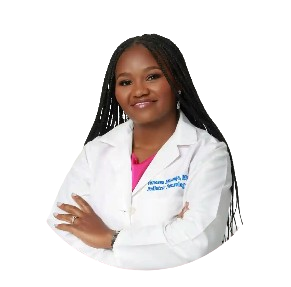
Medically reviewed by Dr. Vanessa Mbanga, MD — Board-Certified Epileptologist, Baylor College of Medicine Epilepsy Fellowship · Dr. Lisa Nassif Wright, MD — Adult & Child Neurologist, Baylor College of Medicine
What Is an EEG — in Plain Language
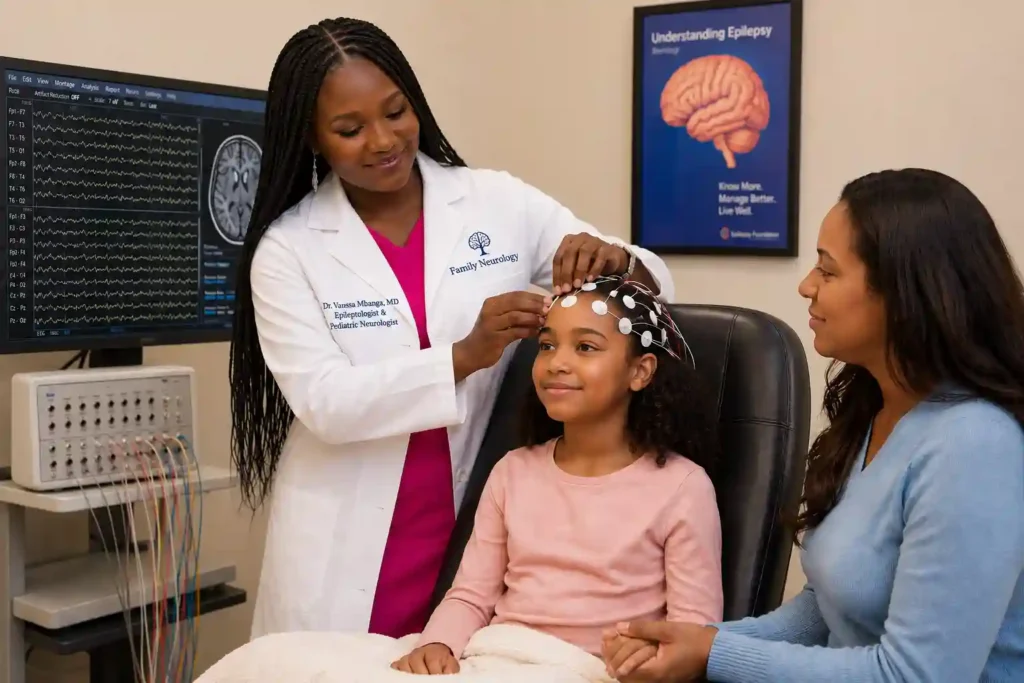
An EEG (electroencephalogram) is a test that measures the electrical activity in your brain. Small sensors are placed on the scalp — like a swim cap with tiny pads — and they pick up the natural electrical signals your brain produces all the time.
The test is completely painless. There are no needles and no electricity going into the body. The sensors only listen — they do not send any signals in.
EEGs help doctors see if there are unusual patterns in brain activity that might explain seizures, staring spells, memory lapses, or other neurological symptoms. At Family Neurology, all EEGs are interpreted personally by Dr. Mbanga — a fellowship-trained epileptologist who spent years reading EEGs at Texas Children’s Hospital.
Why it matters who reads your EEG: An EEG is only as useful as the expertise of the person interpreting it. Dr. Mbanga’s fellowship training in EEG interpretation means subtle patterns — that might be missed — are identified and properly evaluated.
Step-by-Step: What Happens During an EEG
A technician places small metal sensors on your scalp using a water-soluble gel. This takes about 20 minutes. No needles, no pain.
You relax in a comfortable chair or lie down. The machine records brain waves while you are awake, drowsy, or asleep. Some tests include flashing lights or breathing exercises.
The sensors are removed and the gel is washed out. Hair can be washed normally after the test. The whole visit takes about 60–90 minutes.
Dr. Mbanga personally reviews all EEG recordings and discusses results with you at your follow-up appointment with a clear explanation of findings.
Types of EEG We Offer
Records brain activity for 20–40 minutes while you are awake and in our office. Used to evaluate first seizures, diagnose epilepsy syndromes, and monitor ongoing treatment. Suitable for all ages.
- 30–60 minutes total
- Done in our Pasadena office
- Most insurance plans accepted
Performed after reducing sleep the night before. Sleep deprivation can activate seizure patterns in the brain that wouldn’t appear in a standard routine EEG — increasing diagnostic yield.
- Higher chance of capturing abnormalities
- Recommended when routine EEG is normal but seizures continue
- Ask our team if this is right for you
How to Prepare for an EEG
A little preparation makes the test go more smoothly and improves the quality of the results.
- Wash hair the night before or morning of the test — no conditioner, oils, or sprays
- Take all regular medications as prescribed unless your doctor says otherwise
- Eat a normal meal before the test — low blood sugar can affect results
- Get your child to sleep less the night before if instructed (sleep deprivation EEG)
- Bring a list of all current medications to your appointment
- Bring a favorite book or toy for children to stay calm during setup
- Hair conditioner, hair oils, gels, sprays or braids (interferes with sensor contact)
- Caffeine on the day of the test — coffee, tea, soda, energy drinks
- Stopping seizure medications without asking your doctor first
- Heavy exercise immediately before the test
EEG Testing FAQ
Does an EEG hurt?
No. An EEG is completely painless. Small metal sensors are placed on the scalp with a water-soluble gel — no needles, no electricity entering the body, no discomfort. Children usually tolerate it well, especially when a parent is present.
How long does an EEG take?
A routine EEG takes about 60–90 minutes from arrival to completion. The actual recording is 20–40 minutes; the rest is setup and cleanup. A sleep-deprived EEG may take slightly longer.
Can my child go to school after the EEG?
Yes. There is no recovery time needed after a routine EEG. Your child can return to normal activities immediately after the appointment. If a sleep-deprived EEG was done, your child may be tired — plan accordingly.
What can an EEG diagnose?
EEGs are used to diagnose epilepsy and seizure disorders, identify specific epilepsy syndromes, evaluate encephalitis and brain inflammation, assess sleep-related issues, and monitor treatment response. They are especially important for evaluating childhood seizures and epilepsy.
Who interprets the EEG results at Family Neurology?
All EEGs are interpreted by Dr. Vanessa Mbanga, MD — a fellowship-trained epileptologist with advanced training in EEG interpretation from Texas Children’s Hospital and Baylor College of Medicine. Results are discussed with you at a follow-up appointment.
Does insurance cover EEG testing?
Most major insurance plans cover EEG testing when ordered for a medically appropriate reason. Call our office at 713-589-7020 and our team will verify your coverage before your appointment.
Related Pages
Fellowship-trained epileptologist
EEG for diagnosing childhood epilepsy
Epileptologist & EEG specialist
Common questions about EEG testing